

A total of 12 professors were named as authors of the Outstanding Papers for Week 2 of November 2025, selected by the Industry-University Cooperation Foundation. The professors selected are: Professor Kang Hyoung-goo(Department of Finance), Professor Kwak Rho-kyun(School of Mechanical Engineering), Professor Kwon Eil-hann(Department of Earth Resources and Environmental Engineering), Professor Kim Ki-hyun(Department of Civil and Environmental Engineering), Professor Kim Jong-woo(Department of Business Administration), Professor Paik Un-gyu and Professor Song Tae-seup (Department of Energy Engineering), Professor Ahn Ji-seon(School of Business Administration), Professor Ahn Jin-ho(Department of Materials Science and Engineering), Professor Eom Young-ho(Department of Organic and Nano Engineering), Professor Yoo Ho-cheon(Department of Electronic Engineering), and Professor Hong Jin-pyo(Department of Physics). (Names listed in Korean alphabetical order)

Professor Kang Hyoung-goo | Department of Finance – Green finance reform and reshaping firm-banking relationships: Evidence from China
Professor Kang Hyoung-goo's paper was published in the SSCI-indexed international journal Global Finance Journal (2024 IF 5.5). The study utilized China's Green Finance Pilot Zones(GFPZ) policy as a quasi-natural experiment to analyze how eco-friendly financial policies change firm-banking relationships.
The research team applied the Difference-In-Differences (DID) method to loan disclosure data of listed companies to measure firms' repeated borrowing activities. They confirmed that the GFPZ policy significantly reduces the strength of the firm-banking relationship. This effect was more pronounced in regions with higher levels of bank competition and financial development, and for companies with higher transparency or stricter environmental regulations. The team stated that the research "identifies the way sustainability-oriented policies reshape financial relationships," providing insight into how firm-bank interactions adapt under green development policies.

Professor Kwak Rho-kyun | School of Mechanical Engineering – Electroconvective instability near an ion-selective membrane: Scaling law from extended space charge dynamics
Professor Kwak Rho-kyun's paper was published in the SCI-E-indexed international journal Journal of Membrane Science (2024 IF 9.0). His paper focused on explaining how the phenomenon where flow suddenly becomes unstable (electroconvective instability) begins when a strong electric field is formed around an ion-selective membrane.
The research team analyzed the Extended Space Charge(ESC) layer, the point where instability first arises, to propose a new criterion that can more accurately predict when instability occurs than existing research. In particular, the team found a critical value explaining the onset of instability(Rae, crit ≈ 36), which enhances the possibility of early prediction.

Professor Kwon Eil-hann | Department of Earth Resources and Environmental Engineering – Roles of CO₂ in carbon-negative syngas production from pyrolysis of cellulosic biomass (oat hull)
Professor Kwon Il-han's paper was published in the SCI-E-indexed international journal International Journal of Biological Macromolecules (2024 IF 8.5). This study used oat hulls as a model biomass to analyze the role of CO₂ as a partial oxidant during the pyrolysis process.
The research team confirmed that CO₂ promotes heterogeneous gas reactions(HGRs) with volatile matter, increasing the formation of carbon monoxide(CO), with this reaction becoming distinct above 550°C. When an Ni/Al2O3 catalyst was applied, the conversion of pyrolysis products accelerated, and a higher Ni ratio in the catalyst increased the production of CO and CO-rich syngas. The study identified the key mechanism by which CO2 enhances high-carbon utilization efficiency during pyrolysis and promotes the production of CO-centric eco-friendly syngas.
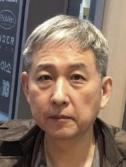
Professor Kim Ki-hyun | Department of Civil and Environmental Engineering – Fabrication of carbon materials from textile waste and their sustainable application toward electrode production
Professor Kim Ki-hyun's paper was published in the SCI-E-indexed international journal Renewable & Sustainable Energy Reviews (2024 IF 16.3). In the study, Professor Kim comprehensively reviewed the manufacturing methods based on heat treatment and chemical activation to convert textile waste into high-performance activated carbons(ACs), and their sustainable application as electrode materials.
The research team compared the effects of precursor type, activation strategy, and heteroatom doping on the structure and properties of textile-derived carbon materials, summarizing the key factors needed to develop high-performance electrodes for Energy Storage Devices(ESD). Notably, securing a high specific surface area, a uniform pore structure, and multi-heteroatom doping were found to significantly enhance electrode performance. The study emphasizes that systematic pre-treatment and environmentally friendly activation processes are essential for developing sustainable textile upcycling- based electrodes.
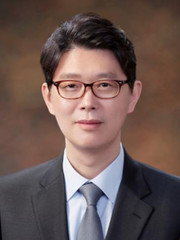
Professor Kim Jong-woo | School of Business Administration – The impact of ternary classification with neutral sentiment on prediction of customer satisfaction in online hotel reviews
Professor Kim Jong-woo's paper was published in the SSCI-indexed international journal Journal of Hospitality and Tourism Technology (2024 IF 6.9). The study verified how a ternary classification model that distinguishes neutral sentiment into 'indifferent neutral' and 'mixed neutral'—instead of the conventional binary model (positive/negative) used in online hotel review analysis—improves customer satisfaction prediction power.
The research team utilized a BERT-based sentiment classification model and ordinal logistic regression to assess the impact of neutral sentiment on hotel attributes (location, cleanliness, service, value-for-money, etc.). They confirmed that incorporating neutral sentiment significantly increases explanatory power, with conflicting effects observed across different attributes. The study offers a practical implication for hotel managers: "service areas showing a high proportion of neutral sentiment should be prioritized for improvement," thus highlighting the importance of neutral sentiment in sentiment analysis.
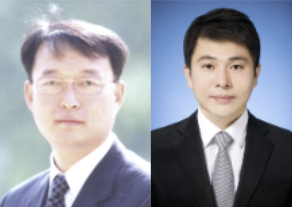
Professor Paik Un-gyu and Professor Song Tae-sup | Department of Energy Engineering – Manipulating the Size of Solid Electrolyte Particles via Spray-Recrystallization: Toward Reliable and High Energy Density All-Solid-State Batteries
The paper by Professor Paik Un-gyu and Professor Song Tae-seup was published in the SCI-E-indexed international journal Advanced Energy Materials (2024 IF 26.0). Through the study, they proposed a method to precisely control the Solid Electrolyte (SE) particle size using a spray-recrystallization technique to enhance the performance of All-Solid-State Batteries(ASSBs).
The research team demonstrated that controlling the SE particle size directly impacts interfacial uniformity with the electrode, SE distribution, lithium-ion mobility, and the Charge Transfer Resistance, Rct, and Li-ion Migration Resistance, Rion. In actual verification, the NCM/SR-LPSC battery cell exhibited a capacity of 171.6mAh g-1 and a retention rate of 74.1% after 100 cycles at room temperature. Enhanced SE distribution and a stable structure were also confirmed even at high capacity(90 wt.% NCM). The study proves that stabilizing the particle distribution of sulfide-based SEs is crucial for realizing the reliability and high energy density of all-solid-state batteries.

Professor Ahn Ji-seon | School of Business Administration – Roles of Self-Service Technology Attributes in Perceived Customer Empowerment
Professor Ahn Ji-seon's paper was published in the SSCI-indexed international journal International Journal of Human-Computer Interaction (2024 IF 4.9). Professor Ahn’s study analyzed, based on the Stimulus-Organism-Response(SOR) framework, how experiences related to Self-Service Technology(SST)—including sensory, emotional, behavioral, and intellectual experiences—affect customer empowerment among consumers in the food service industry.
The research team confirmed that the sensory experience had the greatest impact on empowerment, followed by emotional and behavioral experiences, while intellectual experience and emotional expectation effects were not significant. Furthermore, empowerment was found to strengthen positive behavioral intention by mediating customer loyalty and quality evaluation. This study suggests that utilizing SST can contribute to corporate performance by enhancing customers' sense of self-determination and service satisfaction.

Professor Ahn Jin-ho | Department of Materials Science and Engineering – Middle Interlayer Engineered Ferroelectric NAND Flash Overcoming Reliability and Stability Bottlenecks for Next-Generation High-Density Storage Systems
Professor Ahn Jin-ho's paper was published in the SCI-E-indexed international journal Advanced Science (2024 IF 14.1). This study proposed a method to enhance reliability by adding a 'middle interlayer' to the HfZrOx ferroelectric structure to resolve polarization switching and charge trapping phenomena, which were problems in existing 3D NAND flash.
The structure confirmed stability improvements, including a wide memory window of 11V, a low operating voltage below 10V, and a 54% reduction in threshold voltage variability. Moreover, the program voltage was reduced by 20%, increasing bit density by 25%, which demonstrates the possibility of realizing next generation high-density, low-power memory.

Professor Eom Young-ho | Department of Organic and Nano Engineering – Membrane emulsification-derived cellulose microbeads encapsulating vitamin C with pH-sensitive release via chitosan nanowhisker coating
Professor Eom Young-ho's paper was published in the SCI-E-indexed international journal Carbohydrate Polymers (2024 IF 12.5). Through the study, Professor Eom developed a smart delivery system by fabricating cellulose microbeads capable of stably encapsulating Vitamin C and coating them with chitosan nanowhiskers to achieve pH-sensitive release.
The coated beads remained stable in normal skin conditions at approximate pH of 5.5 while reducing excessive release in inflammatory environments(pH 7.4), thereby mitigating potential skin irritation. The beads also showed approximately 11% antibacterial efficacy against Staphylococcus aureus, suggesting high potential for utilization as a material for cosmetics and skincare.

Professor Yoo Ho-cheon | Department of Electronic Engineering – Spectrally Tuned Floating-Gate Synapse Based on Blue- and Red-Absorbing Organic Molecules
Professor Yoo Ho-cheon's paper was published in the SCI-E-indexed international journal Advanced Functional Materials (2024 IF 19.0). Professor Yoo’s study utilized organic molecules that react differently to blue and red light to implement a floating-gate neural synapse device that operates based on distinguishing light wavelengths.
Experimental results confirmed that charge accumulation and synaptic potentiation reactions differed at the two wavelengths, enabling the construction of a neural network with wavelength-selective learning capability. The research team performed classification of fashion images using this device, recording an accuracy exceeding 91%, demonstrating the feasibility of light-based AI devices.

Professor Hong Jin-pyo | Department of Physics – Direct Growth of Leopard-Patterned Graphene on Zinc Anodes via Sonochemistry
Professor Hong Jin-pyo's paper was published in the SCI-E-indexed international journal Carbon Energy (2024 IF 24.2). In the study, Professor Hong proposed a method to directly grow 'leopard-patterned' graphene on a zinc surface using a sonochemistry-based process to reduce the formation of zinc dendrites and corrosion reactions in zinc-ion batteries.
The coated electrode provided uniform nucleation sites, suppressing dendrite growth, maintaining high ion permeability, and demonstrating stable operation for over 2000 hours. The study proves that this graphene structure is a new electrode design strategy that can significantly improve the lifespan and stability of zinc-ion batteries.
 '한양위키' 키워드 보기