

Criticism on the irresponsible online manner of university students
Social harm is not a matter of freedom anymore
There are two representative online associations in the college society: mobile application called “Everytime” and the individual autonomous student-led university community. For example, Hanyang University’s online student community is called “Weehan.” Both systems consist of online bulletin boards for opinion and experience share, helpful reference and resources for lectures and exams along with general lifestyle boards with secondhand market, room rent, and more. The composition that we have to focus on is the bulletin boards where students are allowed to share their thoughts on any social and political issues.
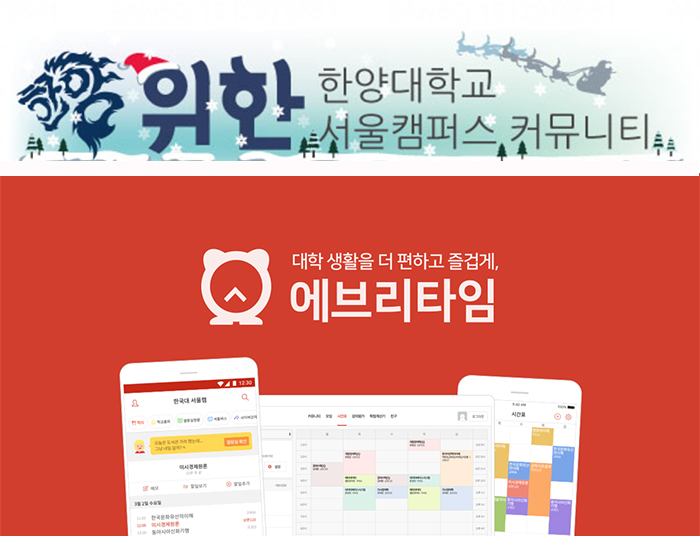
(Photo courtesy of Weehan and Everytime)
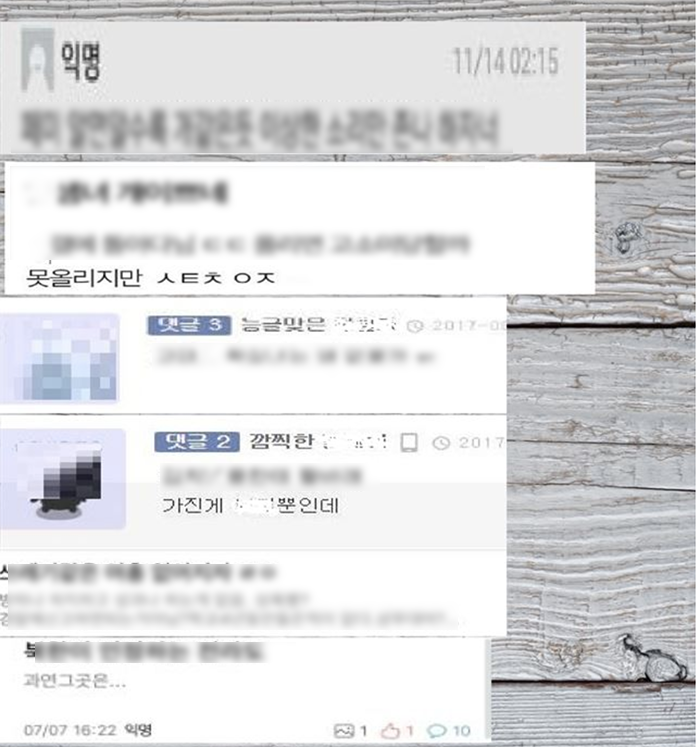
Boards of gerneral organizations are operated based on anonymity. However, the problem arises from unconditional assaults and reproach of a community’s certain people or groups. Behind the mask, some people gain confidence to directly blast at certain specific individuals. If they were to condemn political or social issues arising in the country, world, or even school, the criticism should derive from logical and rational reasons. However, there have been increasing numbers of posts and comments on the online communities that are uncouth and close to being crimes--including sexual assaults and regionalism.
South Korea has experienced a rapid economic development in the last 60 years after the truce of the Korean War. Unfortunately, the social development and sense of obligation to keep civic responsibility did not increase as a parallel to the economic development. Gender equality, feminism, regionalism, and academic factionalism became sensitive topics to discuss due to the illogical segmentation between students who are extremely inclined to certain political or social opinions. Thus, the online community where students used to share their knowledge, give helping hands to each other by exchanging academic resources or lifestyle tips became a site of war where students indiscreetly assault each other, which rarely happens in face-to-face communication.
Boundaries needed
South Korea used to execute a restrictive identification system (also called online real-name policy) to prevent unconditional assaults and cybercrime using language by disclosing part of the name of the writer. However, the law was abolished in 2012 considering it a breach of an individual’s freedom of speech mentioned in the Constitution. However, without any proper restrictions, a few people began to insult others based on regionalism, academic factionalism, lookism, or gender equality. Then the “few” turned into “a lot” which even spread to the online college community.
(Photo courtesy of GettyImages)
Then, what kind of regulations do these online websites or applications have? The disclosure of one’s personal information has been outlawed, and the only choices administrators have have been limited into two- warnings and forceful elimination of the posts. However, warnings are barely effectuated as people with meaningless hatred are not concerned with any advices to provoke their conscience. Thus, many online university communities like Weehan of Hanyang University or Ssodam of Sogang University forcibly remove assaultive posts and comments if they fulfill the following requirements. The post should include sexual harassment or insults to specific individuals or groups and should receive a majority of negative votes by people to eliminate it compulsorily.
The problem is, even if the post includes assaults or harassments, it still can remain on the website without a majority of dislikes. The quality and contents of the post and the aim of language sword entirely depend on the individual’s rationale and conscience. However, if the online community is to be used as a place where factionalists blame all social tragedies on their disliked group of people, sexually harass others with language, and specifically target individuals and illogically insult them, then it is no more a community where intellectual students learning advanced academics share their knowledge at.
The administration of online college communities must create more specific policies to regulate these problems. One solution can be to automatically discern swear words that cause factionalism regarding gender, region, looks, and personal background. Also, warnings that administrators give to a critic should be strengthened in a more severe way. For example, if a user received more than triple warnings, than the administration should consider listing him or her on their blacklist, prohibiting them to upload further posts on the platform.

(Photo courtesy of GettyImages)
December 10 is the International Day for the United Nation’s Universal Declaration of Human Rights. “Recognition of the inherent dignity and of the equal and inalienable rights of all members of the human family is the foundation of freedom, justice and peace in the world.” Hatred towards each other in insulting language and degrading others due to their political standard, gender, or ideas are not what human’s inherent dignity stands for. As the bright future of South Korea, university students should restore their civil responsibility and manners online, and, thus, there should be suitable regulations regarding them.
Kim Ju-hyun kimster9421@hanyang.ac.kr